Free delivery with device purchase.
Free delivery with device purchase.

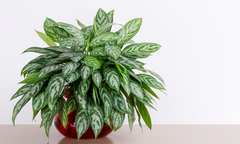
Ever questioned your houseplant addiction and considered curtailing it for good? Think again.
In a 1980s study, NASA announced a list of indoor plants with air filtering properties, equipped to purify our air and boost our health. In fact, they also found that certain houseplants can remove up to 87% of air toxins in just 48 hours. Considering that over 4 million people die worldwide due to indoor air pollution, this was a crucial discovery that has changed many lives for the better.
Certain houseplants can remove up to 87% of air toxins in just 48 hours
To help you purify your indoor space, we’ve compiled a selection of our favourite plants from NASA’s recommended lineup. Keep reading to find out all about them and hear our top tips for pro plant care!

The first plant up on our list is aloe vera, the common household succulent. While famed for its unique leaves and uses in the food and skincare industries, this powerhouse has even more goodness to offer.
The plants that made the final cut of NASA’s list share one thing in common: they’re capable of eliminating VOCs (volatile organic compounds) from the air. Aloe vera has been proven to remove benzene and formaldehyde from indoor spaces, two VOCs typically found inside the home. In fact, aloe vera even develops dark spots if there are high levels of certain VOCs – the plant itself serves as a natural air quality monitor.
Want to know how to care for your Aloe Vera?

Next up on NASA’s selection of air purifying houseplants is the incredible broadleaf lady palm. This elegant species doesn’t actually exist in the wild, designed and brought to life by Chinese cultivators.
Broadleaf lady palms are well-known for their air-filtering skills, removing four key toxins from the air: carbon dioxide, formaldehyde, xylene and ammonia. Since clearer air and more oxygen has been proven to boost mood and concentration, this plant is undoubtedly an important one to have around your home.
How to care for a broadleaf lady palm:

Searching for a more colourful solution to air purification? Look no further than the Barberton daisy. Also known as a gerbera daisy, Barberton daisies are well-known for their air filtering properties and can survive both outdoors and in. If you bring them indoors in the autumn months, they’re likely to survive the winter and reflower in the spring.
Caring for your Barberton Daisy is pretty simple:
Top Tip:
Did you know that you can make your fertilizer at home AND save the planet in the process? Instead of throwing your leftover food scraps into the trash, simply add them to a FoodCycler and watch the magic happen. This reduces them back down to organic material, ideal for feeding your much-loved houseplants.

If you’ve been looking for a houseplant that’s impossible to kill, the Chinese evergreen is your perfect match. Widely known for its ease of care, this pretty little plant packs a punch when it comes to air purification.
Looking after your Chinese evergreen:

Spider plants are another fail-safe when it comes to indoor gardening, especially when you’re an amateur who wants to look like a pro. They flourish easily and quickly, named after the spider-like shoots that grow one after the other, dangling in web formation.
In an experiment performed by NASA, spider plants extracted 95% of toxic formaldehyde from a gas chamber within 24 hours. Cool, right?
Take care of your spider plants by:

Florist’s chrysanthemums rank highly on NASA’s list for air purification, equipped to tackle a vast range of air-based pollutants. While they only bloom for 6 weeks at a time, it’s possible to fertilize the pot again in spring to kickstart a regrowth.
Chrysanthemum flowers are bold, bright and beautiful, so if you’re looking for air purification and an aesthetic boost, this is the plant for you.
Caring for chrysanthemums isn’t too complex:
To conclude:
These are our favourite picks from NASA’s air filtering houseplant recommendations!
If you’re looking for ways to keep your indoor garden looking fresh, investing in a composting alternative could be the solution. Visit the FoodCycler website now to learn how fertilizer can be produced from food waste for healthier plants and a greener planet.
The FoodCycler® is a countertop electric food waste recycler that breaks down food scraps through a mechanical process into a dry, lightweight by-product that can be used in gardening applications as a fertilizer. The FoodCycler® and other electric food waste recyclers are not composters, nor do they produce compost or soil as they do not require additional microbes to break down food waste with bacteria. However, the term “electric composter” has been used to describe electric food waste recyclers.