Free delivery with device purchase.
Free delivery with device purchase.

If mold isn’t your thing, here is a TLDR; upon reading this blog you’ll have an understanding of:
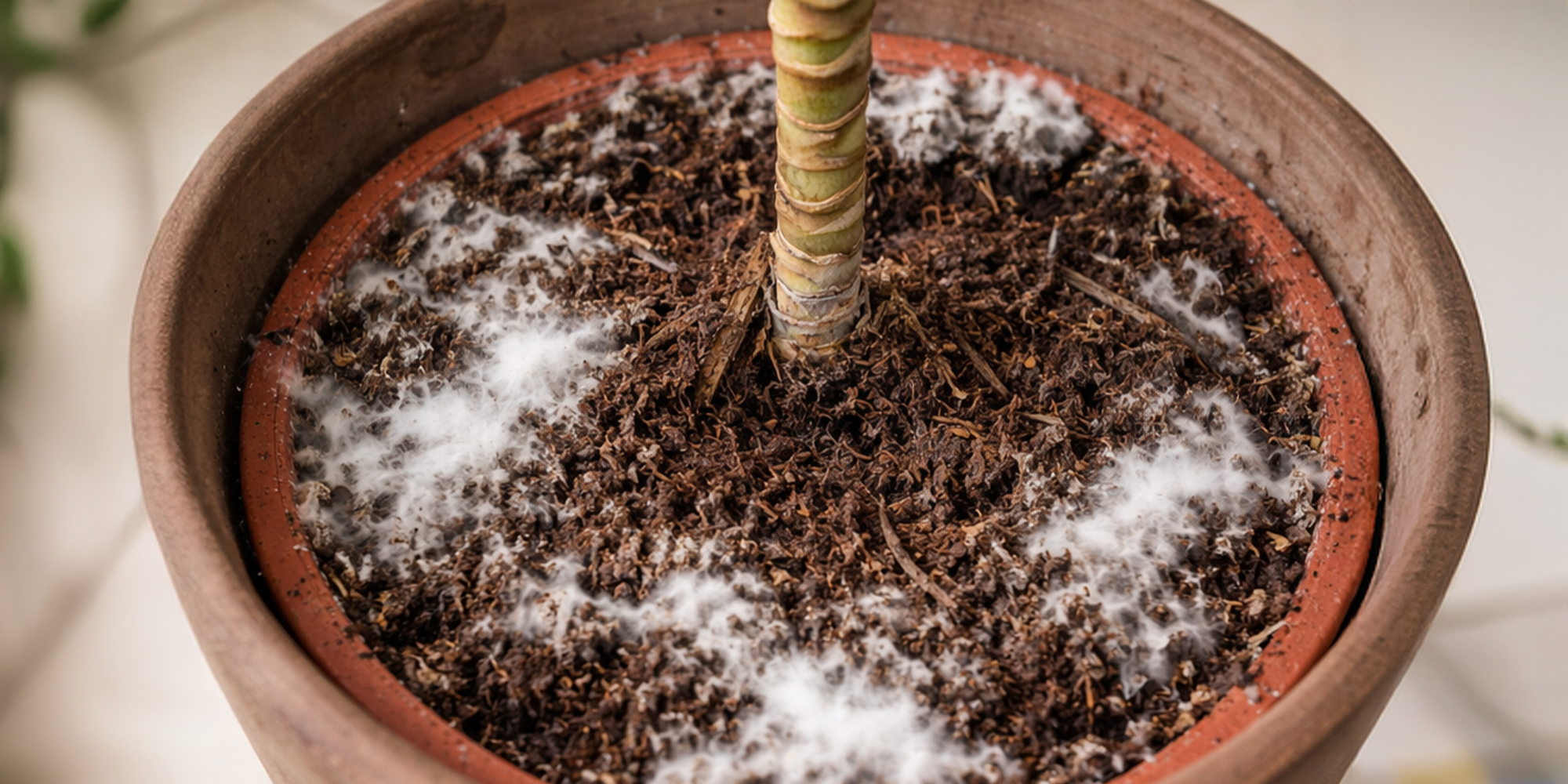
Have you ever been admiring your thriving indoor garden only to discover a patch of white fuzz on the soil around your plants? If so, don’t panic! This blog post will guide you through understanding what that mold is, why it’s there, and what you can do about it.
If the mold on your potted plant’s soil looks like a white fuzzy patch, it’s likely a species of saprophytic fungi. These fungi are part of the largest group that grows on and decays organic matter, playing a crucial role in nutrient cycling, especially nitrogen.
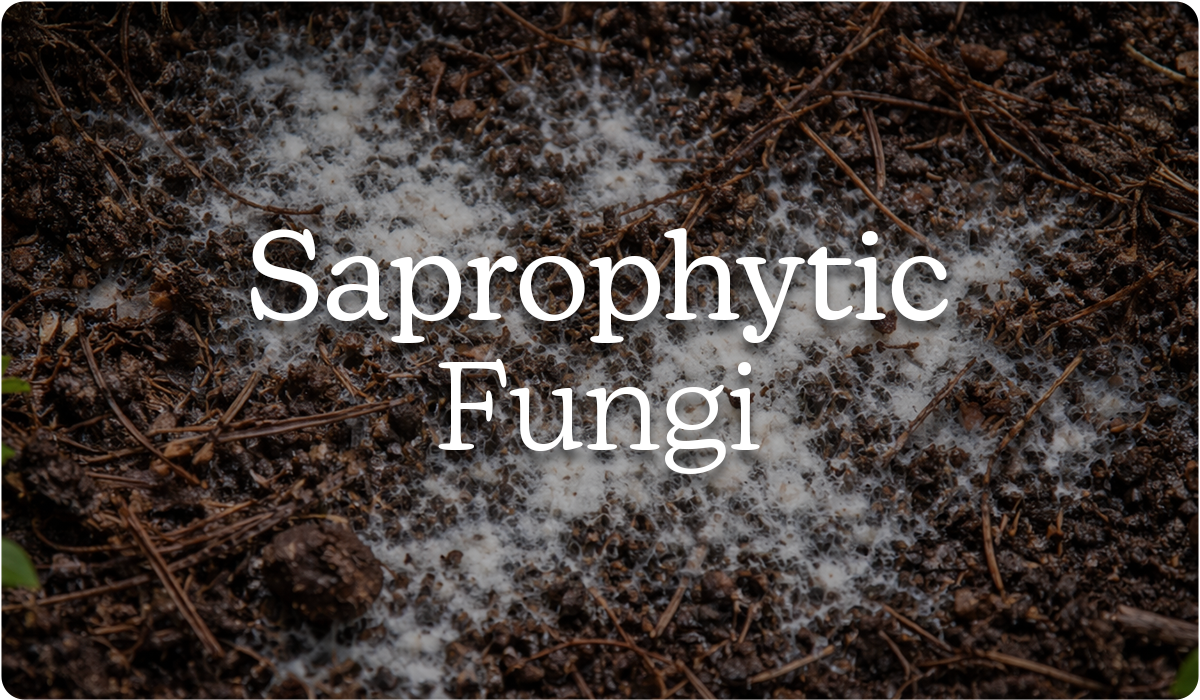
Often referred to as “litter transformers,” saprophytic fungi change the chemical composition of organic material into valuable nutrients for soil and plants. They are vital in food waste decay, breaking down organic material in compost piles.
Alongside actinomycetes, which is a filamentous bacteria common in compost piles, these fungi break down organic matter into essential nutrients for plant growth. While the scientific names might seem complex, just remember that their presence in soil and compost is beneficial for the soil as they recycle organic material, especially our Foodilizer.

Mold can be distinguished very quickly based on its appearance and color. Here is a quick go-to table to help you identify what you’re most likely working with:
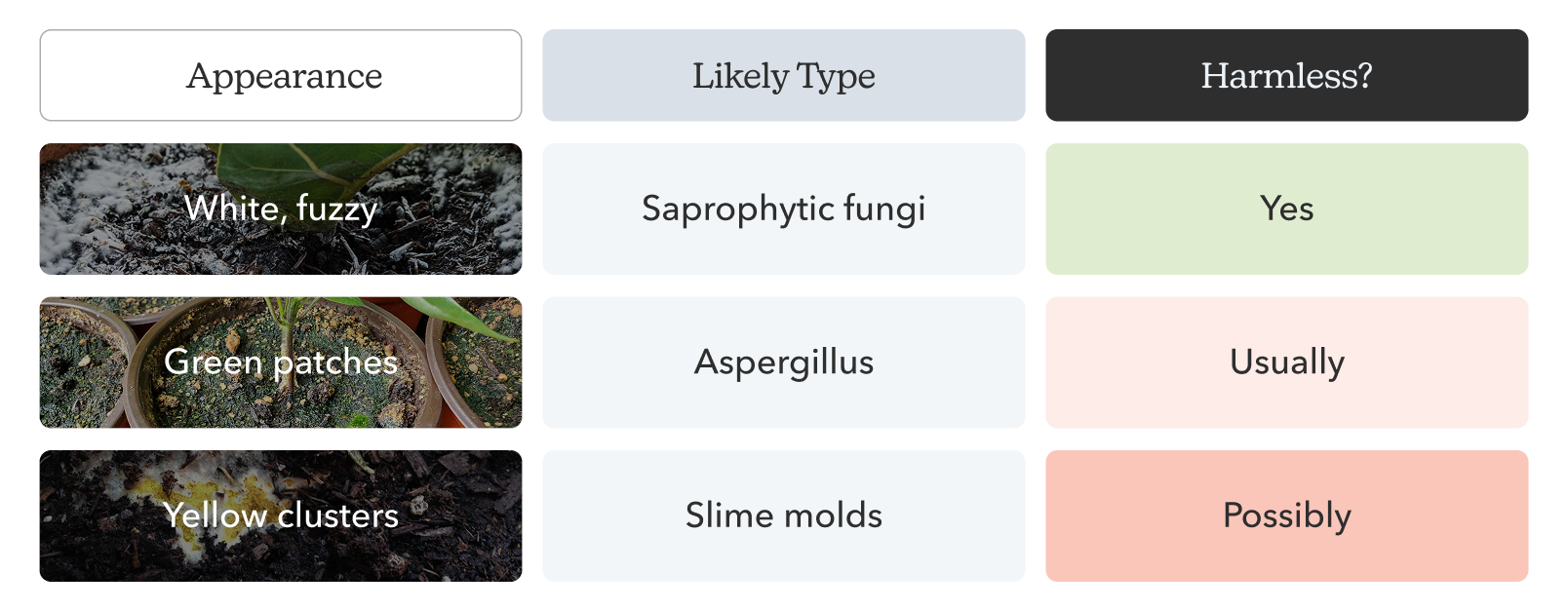
The appearance of mold, or “fruiting bodies” of fungi, is natural. However, not all soils show visible signs of these fungi. Indoor environments often provide ideal conditions for saprophytic fungi to grow and develop mold. Factors include:
The presence of mold or fungi hanging around your soil and plants is not necessarily a bad thing. This is part of the decomposition process. They’re able to cycle nutrients, meaning they’re able to take the amazing nutrients into something bioavailable for the plants they surround to use. They do this by taking the organic matter and decomposing it, using biological pathways. This all works together to establish long term soil health, which keeps your plants happy and healthy.
While it can be beneficial, too much of a good thing can be bad. If there is too much growth, this can lead to diseases within the plants, such as root rot or even attraction of pests.
In colder months, there might be an increased amount of mold that forms. This is due to the closed windows, which can limit the amount of airflow.
It should be noted that any mold that forms is not caused by the FoodCycler, but it may be due to improper mixing or addition of too much Foodilizer. Make sure to read and refer to our Foodilizer gardening guide for best practices.
Expand on the idea that mold signals microbial activity, which helps:
The connection between saprophytic fungi and food waste decay is essential in organic breakdown of food waste.. By decomposing organic waste, they transform it into nutrient-rich soil amendment.. This process aligns with our mission at Food Cycle Science Corporation, where tools like the FoodCycler enable individuals and communities to recycle food waste sustainably.
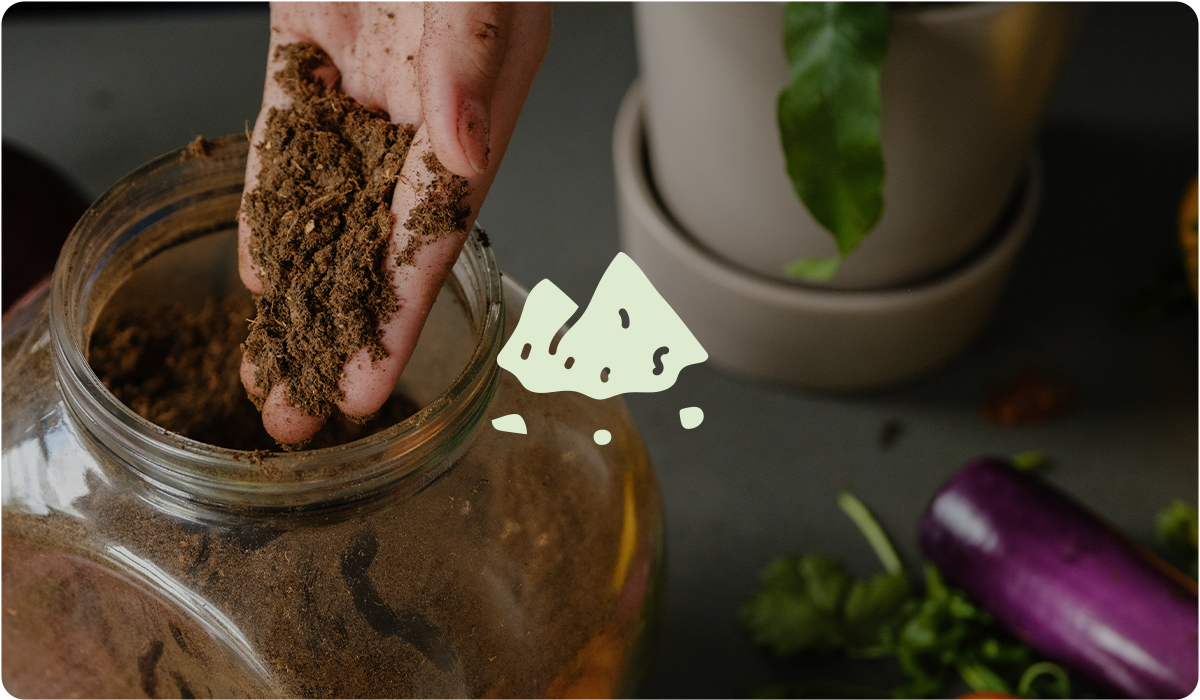
While the FoodCycler itself does not require the use of microbes to produce our soil amendment, they are a vital part of the process once mixed into soil. The rich organic matter found in our Foodilizer is broken down by the microbes found in your soil. Only once this organic matter is broken down is it accessible by the plants. This is the main reason why we suggest letting your Foodilizer and soil mixture incubate before potting.
Whether or not to address the mold is up to you. If it doesn’t bother you, you can let nature take its course. If you’re concerned about the presence of mold (or you find it icky), here are some suggestions:
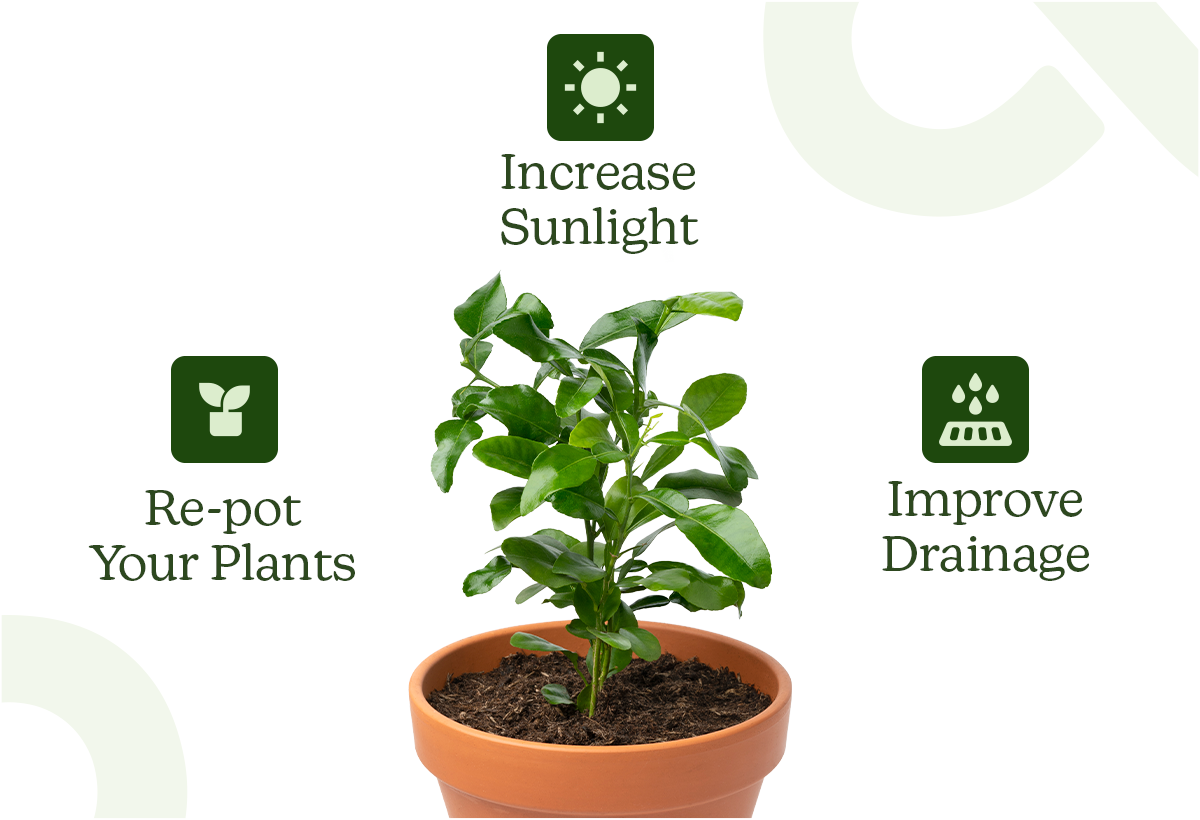
Mix Organic Fertilizer Properly: Follow the recommended ratio for mixing fertilizer with soil to prevent mold growth (we recommend between 1:20 and 1:25).

Note: If you have concerns about allergies or bronchial conditions, consult an expert and seek out specific guidelines for your situation.
All in all, we want to make sure you’re being safe while enjoying playing around with your Foodilizer. Life happens, and mold is a possibility because of the profile that soil is. As long as you’re equip to deal with it, with both understanding of why it’s there and what it safely looks like, then you’re golden.
In this post, “mold” and “fungi” are used interchangeably. It’s important to know that all molds are fungi, but not all fungi are molds. Molds grow in multicellular filaments called hyphae, often visible as patches on surfaces. Both molds and other fungi contribute to the decomposition process in soil and compost, recycling nutrients.
The FoodCycler® is a countertop electric food waste recycler that breaks down food scraps through a mechanical process into a dry, lightweight by-product that can be used in gardening applications as a fertilizer. The FoodCycler® and other electric food waste recyclers are not composters, nor do they produce compost or soil as they do not require additional microbes to break down food waste with bacteria. However, the term “electric composter” has been used to describe electric food waste recyclers.